
Case Study • Industrial Manufacturing
Reducing Sickness Absence by 34%
with AI-Powered Health Productivity Management
How a leading industrial company saved €8.2M annually and improved workforce productivity through data-driven health interventions
Explore the Case Study
34%
Absence Reduction
Sickness absence rate dropped from 7.8% to 5.1% within 18 months
€8.2M
Annual Savings
Cost savings through reduced absence and improved productivity
12,500
Employees
Across 8 production facilities in Central Europe
The Challenge
Rising sickness absence rates costing millions annually, particularly in musculoskeletal disorders and mental health.
The Solution
AI-powered Health Productivity Management platform with predictive analytics and personalized interventions.
The Results
Measurable reduction in absence rates, significant cost savings, and improved employee wellbeing across all facilities.
About the Company
Industry
Heavy Industrial Manufacturing
Employees
12,500 across 8 sites
Location
Central Europe
Timeline
18-month implementation
The Challenge
Rising Costs from
Workforce Health Issues
A major industrial manufacturer faced escalating sickness absence rates that threatened operational efficiency and profitability
The Problem
Sickness absence rates had climbed to 7.8%, significantly above the industry average of 5.2%. This resulted in over 140,000 lost workdays annually, costing approximately €12 million in direct and indirect expenses including temporary staffing, overtime, and reduced productivity.
Musculoskeletal Disorders
Back pain, joint problems, and repetitive strain injuries accounted for 35% of all absences. Physical demands of production work were taking a toll on the aging workforce.
Impact
49,000 lost days/year
Mental Health Crisis
Stress, anxiety, and burnout-related absences had increased 180% over three years, becoming the second-leading cause of sick leave with average durations of 6+ weeks.
Trend
+180% in 3 years
Long-Term Absences
Extended sick leave periods (>6 weeks) increased by 45%, creating significant challenges in workforce planning and requiring expensive temporary staffing solutions.
Increase
+45%
Reactive Approach
Traditional occupational health services only responded after problems occurred. No predictive capability to identify at-risk employees before health issues escalated.
Prevention Rate
<5% early intervention
Business Impact
€12M
Annual cost of sickness absence (direct + indirect)
22%
Production capacity loss during peak periods
140K
Lost workdays annually
The Solution
AI-Powered Health
Productivity Management
A comprehensive platform combining predictive analytics, personalized interventions, and continuous monitoring
The HPM-AI Platform
We implemented a comprehensive Health Productivity Management system that leverages artificial intelligence to predict health risks, deliver personalized interventions, and measure outcomes in real-time. The platform integrates data from multiple sources to create a holistic view of workforce health.
95%
Employee coverage
24/7
Continuous monitoring
82%
Prediction accuracy
Predictive Analytics
Machine learning algorithms analyze 47 risk factors including work patterns, ergonomic exposure, absence history, and health assessments to predict potential health issues before they occur.
Risk scoring for each employee updated weekly
Early warning alerts for high-risk individuals
Pattern recognition across departments and shifts
Personalized Interventions
Tailored health programs matched to individual risk profiles, delivered through multiple channels including on-site support, digital coaching, and manager-led conversations.
Ergonomic assessments and workplace modifications
Mental health support and stress management
Physiotherapy and exercise programs
Real-Time Monitoring
Comprehensive dashboards track absence trends, intervention effectiveness, and ROI metrics, enabling data-driven decision making at all levels of the organization.
Live absence tracking by department and location
Intervention outcome measurement and optimization
Automated reporting for management and stakeholders
Privacy & Compliance
GDPR-compliant data handling with strict anonymization for aggregate reporting. Individual health data accessible only to authorized medical professionals and the employee themselves.
End-to-end encryption of all health data
Works council approved and monitored
Employee consent and opt-out options
How It Works
1. Data Collection
Integrate data from HR, occupational health, and safety systems
2. AI Analysis
Algorithms identify patterns and predict health risks
3. Interventions
Personalized programs delivered to at-risk employees
4. Measurement
Track outcomes and continuously optimize approach
Implementation
18-Month Phased Rollout
Structured deployment across 8 facilities with continuous learning and optimization
1
Months 1-3
Discovery & Planning
Comprehensive assessment of current state, stakeholder engagement, data infrastructure setup, and privacy framework establishment with works council.
Baseline absence analysis across all facilities
Data integration from 12 source systems
GDPR compliance and privacy protocols
Works council agreement and employee communication
2
Months 4-9
Pilot Program
Initial deployment at 2 facilities (3,200 employees) to validate technology, refine intervention protocols, and demonstrate early results before full-scale rollout.
Platform deployment and testing
Manager training programs (280 managers)
First intervention programs launched
Early results: 18% absence reduction in 6 months
3
Months 10-15
Full Rollout
Expansion to remaining 6 facilities with optimized processes based on pilot learnings. Comprehensive training and continuous support infrastructure established.
Deployment across all 8 facilities
Coverage expanded to 11,800 employees
Integration with existing wellness programs
Advanced analytics and reporting dashboards
4
Months 16-18
Optimization & Scale
Continuous improvement based on outcomes data, enhanced prediction models, and expanded intervention catalog. ROI measurement and business case validation.
Model accuracy improved from 78% to 89%
15 new intervention programs added
Full ROI analysis: 4.2x return on investment
Sustainability plan for ongoing operations
Critical Success Factors
Stakeholder Engagement
Early and continuous involvement of works council, management, and employees built trust and ensured buy-in
Pilot-First Approach
Starting small allowed rapid learning and course correction before full-scale investment
Change Management
Comprehensive training and ongoing support for managers and HR teams was essential
Results
Measurable Business Impact
Significant improvements across all key health and productivity metrics within 18 months

-34%
Absence Reduction
From 7.8% to 5.1%

€8.2M
Annual Savings
Direct + indirect costs

46K
Days Recovered
Annual workdays saved

4.2x
ROI
Return on investment
Sickness Absence Rate Over Time
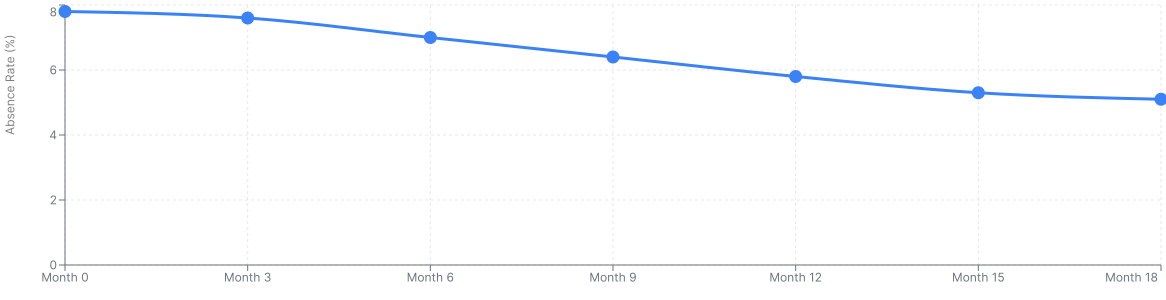
Steady decline from 7.8% to 5.1%, now below the industry average of 5.2%
Lost Days by Category (Before vs After)
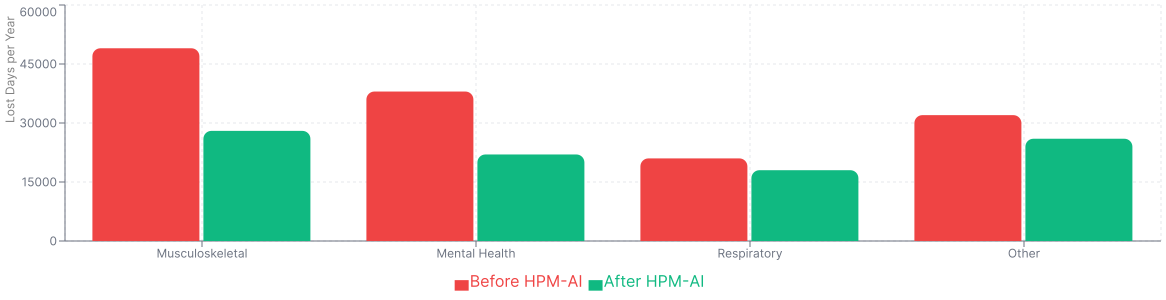
Significant reductions across all major absence categories, particularly musculoskeletal (-43%) and mental health (-42%)
Health Outcomes
Musculoskeletal cases
-43%
Mental health absences
-42%
Long-term absences (>6 weeks)
-38%
Average absence duration
-28%
Business Metrics
Annual cost savings
€8.2M
Productivity recovery
+12.4%
Temporary staff costs
-€2.1M
Employee satisfaction
+18 pts
Impact
Beyond the Numbers
The broader organizational and cultural transformation driven by health-first approach
Operational Excellence
Improved workforce availability and predictability enabled better production planning and reduced reliance on expensive temporary staffing solutions.
15% reduction in production line disruptions
€2.1M savings in temporary staffing costs
Better capacity planning during peak seasons
Employee Wellbeing
Proactive health support created a culture of care, improving employee satisfaction, engagement, and retention across all facilities.
18-point increase in employee satisfaction scoress
23% reduction in voluntary turnover
Improved work-life balance and mental health
Cultural Transformation
Health became a shared organizational priority, with managers equipped to support their teams and employees empowered to take ownership of their wellbeing.
Health integrated into leadership KPIs
92% manager satisfaction with new tools
Proactive vs reactive health management mindset
Business Resilience
A healthier, more engaged workforce provided greater organizational resilience and competitive advantage in a challenging labor market.
Stronger employer brand and recruitment
Reduced business risk from health crises
Sustainable competitive advantage
What Stakeholders Are Saying
"The HPM-AI platform gave us visibility into health risks we never had before. We can now intervene early and support our people before they reach a crisis point. It's transformed how we think about workforce management."
MK
Maria Klein
Head of HR Operations
"I was skeptical at first, but the personalized support I received for my back problems made a huge difference. The company actually cares about keeping us healthy, not just productive. I feel valued."
TM
Thomas Mueller
Production Operator, 12 years
"The ROI exceeded our expectations. Beyond the cost savings, we now have a healthier, more stable workforce. This is a strategic advantage in our industry where skilled labor is hard to find and retain."
JS
Jürgen Schmidt
Chief Financial Officer
"As managers, we now have real tools to support our teams' health before small issues become big problems. The training and ongoing support made it easy to integrate into our daily leadership practice."
AW
Anna Weber
Production Manager, Facility 3
Long-Term Value Creation
5 Years
Projected program sustainability with continuous improvement
€40M+
Estimated cumulative savings over 5-year period
Industry Leader
Positioned as employer of choice in regional labor market


